

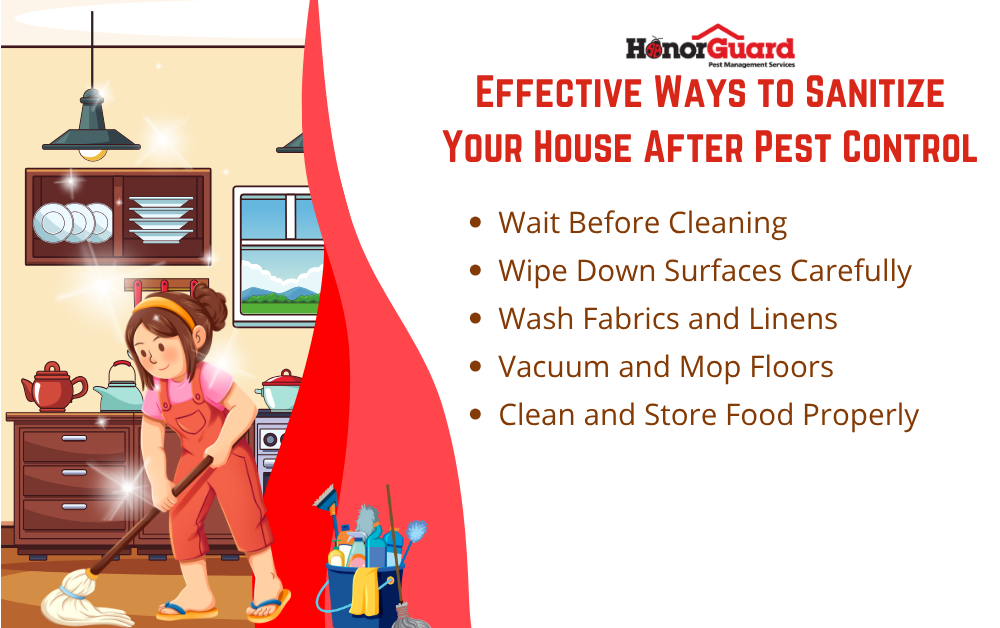
Maintaining a clean and safe home after maintaining proper pest control is crucial for protecting your home and family’s health and preserving the effectiveness of the treatment. After a professional service from HonorGuard, it’s necessary to apply effective cleaning methods to ensure your space remains fresh, sanitary, and pest-free. Pest control treatments are formulated to eliminate pests and prevent their return, but careful cleaning enhances those results by removing allergens, residues, and debris. A thorough post-treatment cleaning not only promotes hygiene but also helps your family feel comfortable and secure again. Understanding how and when to clean ensures that you get the full benefits of your pest control service while maintaining a healthy home environment.
Wait Before Cleaning
Give the Treatment Time to Work
After pest control, the most crucial step is to wait before cleaning. Allowing 24 to 48 hours gives the treatment enough time to settle and fully activate, ensuring it remains effective against pests. Cleaning too early can wash away or weaken the protective layer left behind by the pest control solution. By waiting the recommended amount of time, you maximize the treatment’s longevity and overall success. This patience ensures your pest control service delivers long-lasting protection for your home and family.
Proper Ventilation for a Fresh Space
Once it’s safe to clean, start by opening all windows and doors to ventilate your home thoroughly. Proper airflow helps eliminate any lingering odors from pest control treatments and allows fresh air to circulate throughout your space. This simple but effective step can make your home feel rejuvenated and comfortable again. It also helps dry any moisture left behind during the treatment process, restoring a balanced indoor environment. Fresh ventilation complements pest control by ensuring your home feels as clean as it is protected.
Protect the Effectiveness of Pest Control
Following the proper waiting period protects the effectiveness of your pest control treatment and prevents premature cleaning from reducing its power. When the treatment has time to bond with surfaces and penetrate pest habitats, it works more efficiently. This ensures pests are eliminated at the source and deters new ones from entering. Waiting also helps avoid unnecessary exposure to residual chemicals, keeping your cleaning process safe and effective. With a balanced approach, you maintain both cleanliness and lasting pest protection.
Wipe Down Surfaces Carefully
Clean High-Touch Areas Gently
When it’s time to begin cleaning, focus on high-touch areas like countertops, tables, and doorknobs using mild soap and warm water. These are spots where dust, bacteria, and pest residues are most likely to settle. Limit the use of potent cleaners that could affect the pest control treatment’s effectiveness. A gentle cleaning approach ensures your surfaces are sanitized without disrupting treated areas. This process helps preserve cleanliness and household safety while allowing the pest control to continue working effectively.
Avoid Treated Zones
Be cautious around treated areas such as baseboards, corners, and cracks along floors where pest control products were applied. Scrubbing or mopping these areas too aggressively can remove the protective layer designed to repel pests. Focus your cleaning on areas that weren’t directly treated, such as kitchen counters, bathrooms, and frequently used surfaces. This targeted approach maintains sanitation while preserving pest control effectiveness. By cleaning carefully, you strike the perfect balance between cleanliness and pest prevention.
Create a Hygienic Living Space
Thorough but mindful cleaning creates a healthy home environment that feels fresh and inviting. When you clean safely, you preserve both the comfort of your living space and the strength of the pest control solution. Regular maintenance in the right areas reinforces your home’s long-term cleanliness. By adopting gentle cleaning habits, you ensure your pest service continues to provide protection long after the treatment. A well-maintained home stays pest-free, hygienic, and pleasant for everyone inside.
Wash Fabrics and Linens
Refresh Soft Surfaces
After pest control, wash all washable fabrics like bedding, curtains, and pet blankets in hot water to remove any residual chemicals or allergens. Hot water helps break down and eliminate any microscopic particles left behind by the treatment. For items that can’t be washed, consider airing them out outdoors or using a fabric-safe disinfectant spray. This keeps your fabrics fresh while maintaining the results of pest control. Clean, sanitized fabrics contribute to a healthier and more comfortable home environment.
Maintain Comfort and Safety
Soft surfaces like linens and upholstery often trap dust and allergens, so cleaning them after pest control supports better indoor air quality. This step helps ensure your home remains safe for family members and pets. Fresh fabrics create a sense of renewal and comfort that complements your newly treated space. Regular cleaning also reduces the chance of pests lingering in hidden areas. By refreshing your soft furnishings, you extend the effectiveness of your pest control treatment and restore household comfort.
Reinforce Overall Pest Control
Properly cleaning fabrics reinforces the benefits of pest treatments by eliminating potential hiding spots for pests and allergens. When every layer of your home—from floors to linens—is clean, you create an unwelcoming environment for future infestations. This extra attention to detail supports the professional work done by your pest control provider. A comprehensive approach keeps your home consistently healthy and pest-free. Clean fabrics aren’t just about comfort—they’re a key part of an ongoing pest prevention plan.
Vacuum and Mop Floors
Remove Debris and Dust
Vacuuming after pest control helps remove dust, dead pests, and residue left behind by the treatment. Focus on carpets, rugs, and upholstered furniture to ensure all areas are clean and free of debris. Follow with mopping hard floors using a mild cleaning solution to restore shine and freshness. Avoid overly wet mopping near treated baseboards to maintain the pest barrier. A clean floor enhances the overall hygiene and comfort of your living space.
Dispose of Waste Safely
Once vacuuming is complete, promptly dispose of the canister contents or insert a new bag to prevent reinfestation or contamination. Transfer all vacuumed material into a properly sealed bag before disposal and take it outside right away. This step prevents pests from returning and supports the long-term effectiveness of pest control treatments. Safe disposal practices are crucial for maintaining a pest-free home. By handling cleaning waste properly, you ensure your pest treatments results remain intact.
Maintain Long-Term Cleanliness
Consistent vacuuming and mopping after pest control promotes long-term hygiene and protection. These tasks remove any remaining residues and keep your home feeling clean and fresh. Routine maintenance also helps prevent future infestations by removing attractants like crumbs and debris. When combined with professional pest treatments, this ongoing cleanliness provides complete peace of mind. A well-maintained floor not only looks great but also strengthens your home’s defense against pests.
Clean and Store Food Properly
Sanitize Food Storage Areas
After pest control, it’s essential to clean and organize all food storage areas, such as pantries and cabinets. Wipe down shelves with a gentle disinfectant and discard any open or contaminated food packages. Keeping storage areas clean ensures that pests won’t have a reason to return. This step is crucial for maintaining both food safety and pest prevention. A clean pantry supports the full effectiveness of your pest treatment.
Use Airtight Containers
Storing food in airtight containers helps protect against contamination and prevents pests from accessing dry goods. Grains, cereals, and snacks should all be sealed tightly to maintain freshness and hygiene. Proper food storage also reduces odors that attract pests into your home. This small but impactful step strengthens your pest control efforts and keeps your kitchen organized. Secure storage solutions make a significant difference in long-term pest prevention.
Prevent Future Infestations
Keeping your food storage clean and well-organized not only promotes hygiene but also prevents future pest problems. Pests are drawn to clutter and food residue, so maintaining order discourages them from returning. This proactive approach complements professional pest control treatments and enhances your home’s safety. With consistent attention to storage cleanliness, your home remains both functional and pest-free. Food safety and pest prevention go hand in hand for lasting peace of mind.
Conclusion
Proper sanitation after pest control is vital for maintaining a safe, clean, and pest-free home. With HonorGuard, you receive expert pest control services designed to protect your property and give you confidence in your living environment. Following essential cleaning practices—such as waiting before cleaning, wiping surfaces carefully, washing fabrics, vacuuming floors, and storing food properly—helps reinforce the effectiveness of your treatment. These efforts ensure your home remains fresh, healthy, and protected long after professional pest control.
Contact HonorGuard today to schedule your pest control service and experience lasting protection, professional care, and a cleaner, safer home.